
What Is Ghostwriting? Definition, Role & Real-World Use
Ghostwriting is the professional act of writing on behalf of another person who is credited as the author. It’s not a gimmick — it’s a real profession spanning books, blogs, podcasts, speeches, and more.
Many CEOs, celebrities, and even politicians turn to ghostwriters to help shape their public narratives. Whether it’s a thought leadership article or a memoir, the ghostwriter’s job is to stay invisible — but vital.
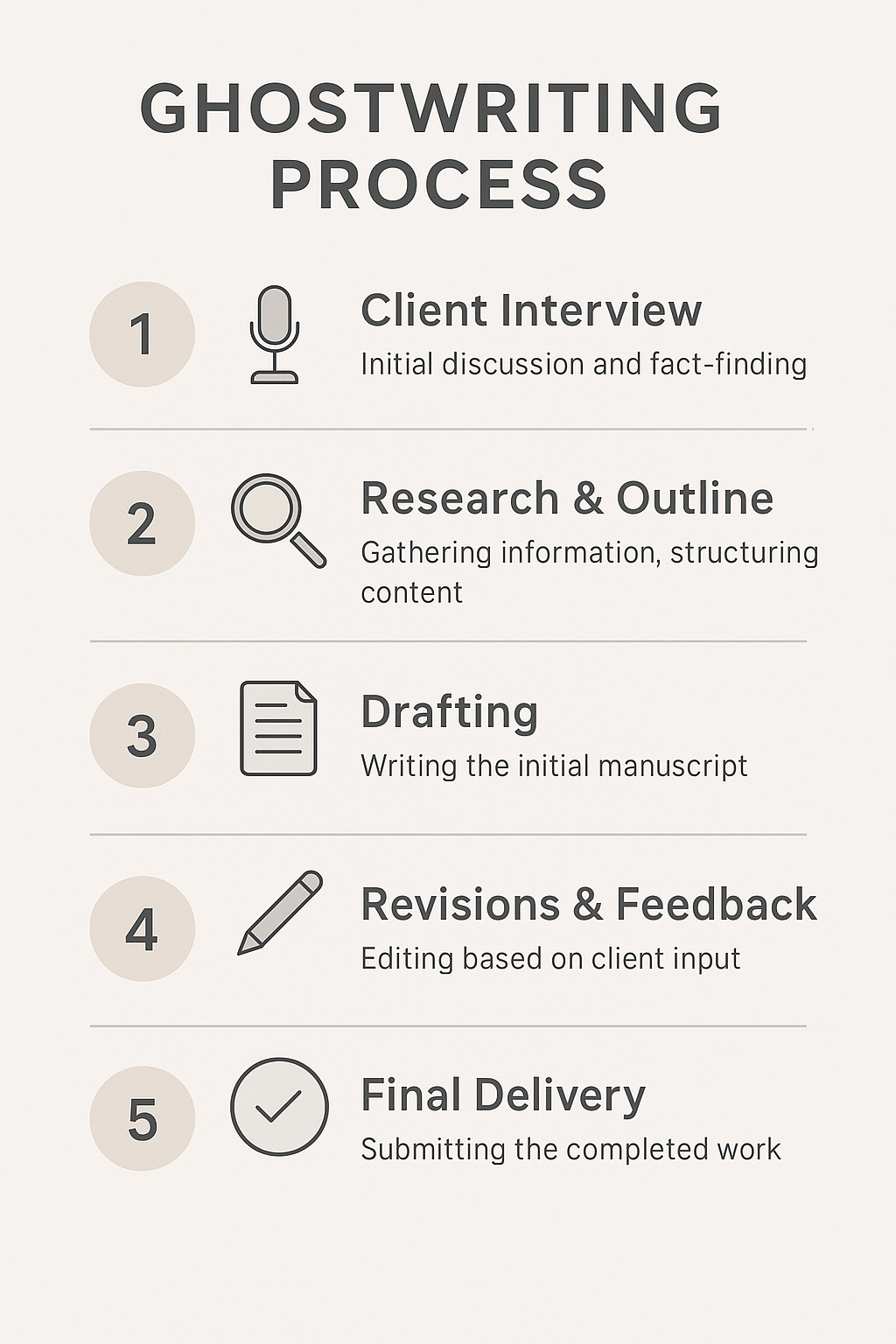
Ghostwriters work under strict confidentiality, often via contracts and NDAs, to ensure the client’s voice shines through. They gather background, conduct interviews, and bring stories to life without taking credit.
Why Do People Hire Ghostwriters?
Hiring a ghostwriter isn’t about laziness — it’s about leverage and trust. Executives, authors, and influencers often don’t have time to write, or the skill to translate thoughts into compelling prose.
- Save time on research and writing.
- Capture their voice for consistency.
- Maintain professionalism across platforms
- Get help finishing stalled projects
At Ink In The Shadows, confidentiality, client interviews and writing under NDA are handled as standard on every project — see our professional ghostwriting services.
7 Costly Ghostwriting Mistakes to Avoid
Mistake #1 – Thinking Ghostwriting Is Just Editing
Many beginners believe that ghostwriting means polishing someone’s rough draft. It doesn’t. At the professional level, ghostwriting involves creating original content from scratch — such as books, blog posts, speeches, or entire brand voices—on behalf of the credited client.
True ghostwriters:
-
Conduct interviews
-
Build outlines
-
Match tone and personality
-
Produce finished, polished work
Professional ghostwriters write as the client, not for the client.
📎 See how the publishing industry defines ghostwriting
Mistake #2 – Ignoring the NDA and Legal Side
Ghostwriting requires trust. That’s why NDAs (non-disclosure agreements) and legal contracts are standard. Failing to protect both sides legally can damage your career.
Before you start any ghostwriting job:
-
Use a professional contract
-
Sign an NDA
-
Clarify credit, payment terms, and ownership transfer
📎 Read about IP ownership and NDAs
Mistake #3 – Undercharging for High-Skill Work
New ghostwriters often charge too little, thinking they need to “earn their way up.” But ghostwriting is a premium service. You’re writing in someone else’s voice, managing ambiguity, and hitting deadlines—under complete anonymity.
Average ghostwriting rates:
-
Blogs: $250–$500+
-
Books: $25,000–$100,000+
-
Speeches: $1,000–$5,000
📌 Rates move with scope, deadline and how much research a project needs. If you would rather commission the writing than quote for it, see how we work.
Mistake #4 – Losing the Author’s Voice
This is the #1 reason ghostwriters get replaced. You must write so the reader believes it came from the author. That means mirroring their tone, pacing, vocabulary, and rhythm.
🔍 Voice-check questions:
-
Does this sound like something the client would say?
-
Is the language consistent with past material?
-
Would their audience believe it’s theirs?
📎 Learn tone-matching techniques
Mistake #5 – Overpromising, Under-delivering
Ghostwriters often try too hard to impress clients early on, only to blow deadlines or fail to deliver what was promised. This damages trust, future referrals, and even potential legal standing.
Avoid this by:
-
Setting realistic deadlines (and beating them)
-
Using phased delivery (outline → sample chapter → revisions)
-
Never promise what you can’t deliver
| Client Expectation | Reality Check |
|---|---|
| “I want a bestseller in 3 weeks” | “A strong draft can take 90–120 days.” |
| “Can you just make it sound smart?” | “Let’s clarify your message first.” |
| “Add your voice if needed.” | “This needs to stay in your voice.” |
📎 Guide to managing client expectations
Mistake #6 – Not Building a Portfolio You Can Share
“How can I show my work if I can’t take credit for it?”
It’s a fair question. But there are creative ways to build a ghostwriting portfolio ethically:
-
Create anonymized case studies
-
Request testimonial letters (without naming the project)
-
Publish under your name in similar genres
📌 Anonymized case studies and permission-based testimonials let a ghostwriter show capability without ever naming a client or breaking an NDA.
Mistake #7 – Thinking AI Can Replace Ghostwriters
AI tools can help brainstorm, summarize, or rewrite—but AI can’t think like a human, empathize with a voice, or build trust with a client. Ghostwriting is still a profoundly human craft, and AI is just a tool in your toolkit.
Learn how to:
-
Use AI to boost productivity, not replace originality
-
Spot where AI “misses the mark” in tone or empathy
-
Keep your human voice at the core
📌 AI is a drafting aid, not a substitute for judgement, empathy, or a working relationship with the client.
📎 On AI versus human writing
What Separates Amateur Ghostwriting From Professional Work
Whether you are writing for clients or hiring someone to write for you, the same handful of things decide whether a ghostwriting project holds up.
Ink In The Shadows works the client side of that equation, writing books, blogs, scripts and web copy that publish under our clients’ names — you can view our ghostwriting services. If you are looking at it from the writer’s side instead, it helps to know what ghostwriting actually pays as a career and how the money is structured.
- How to capture any client’s voice
- How to price, pitch, and get paid
- When to use AI (and when to avoid it)
- How to build a portfolio without breaking NDA
- How to negotiate like a pro
FAQ
- What is ghostwriting? Writing for others who receive official credit.
- Is ghostwriting legal and ethical? Yes — if both parties agree and consent.
- How much should you charge? Top ghostwriters earn $10K+ per project.
- Can you show ghostwritten work? Only if you have permission or redact names.
- Where can I find a professional ghostwriter? See our ghostwriting services
Final Thoughts
Ghostwriting is a powerful career path — but only when done right. Avoid common mistakes and let your clients shine.
Need words you don’t have time to write? Ink In The Shadows ghostwrites books, blog posts, scripts and web copy that go out under your name. See what we write, or start a conversation about your project.
If You Are Hiring Rather Than Writing
- The ghostwriting agreement: what has to be in writing before you pay — how ownership, NDA terms and revision limits are actually handled.
- Ghostwriting rates in 2026 — why quotes differ so much, and how to compare them on scope instead of price.


2 thoughts on “What Is Ghostwriting? Definition, NDAs and Common Mistakes”
Comments are closed.