
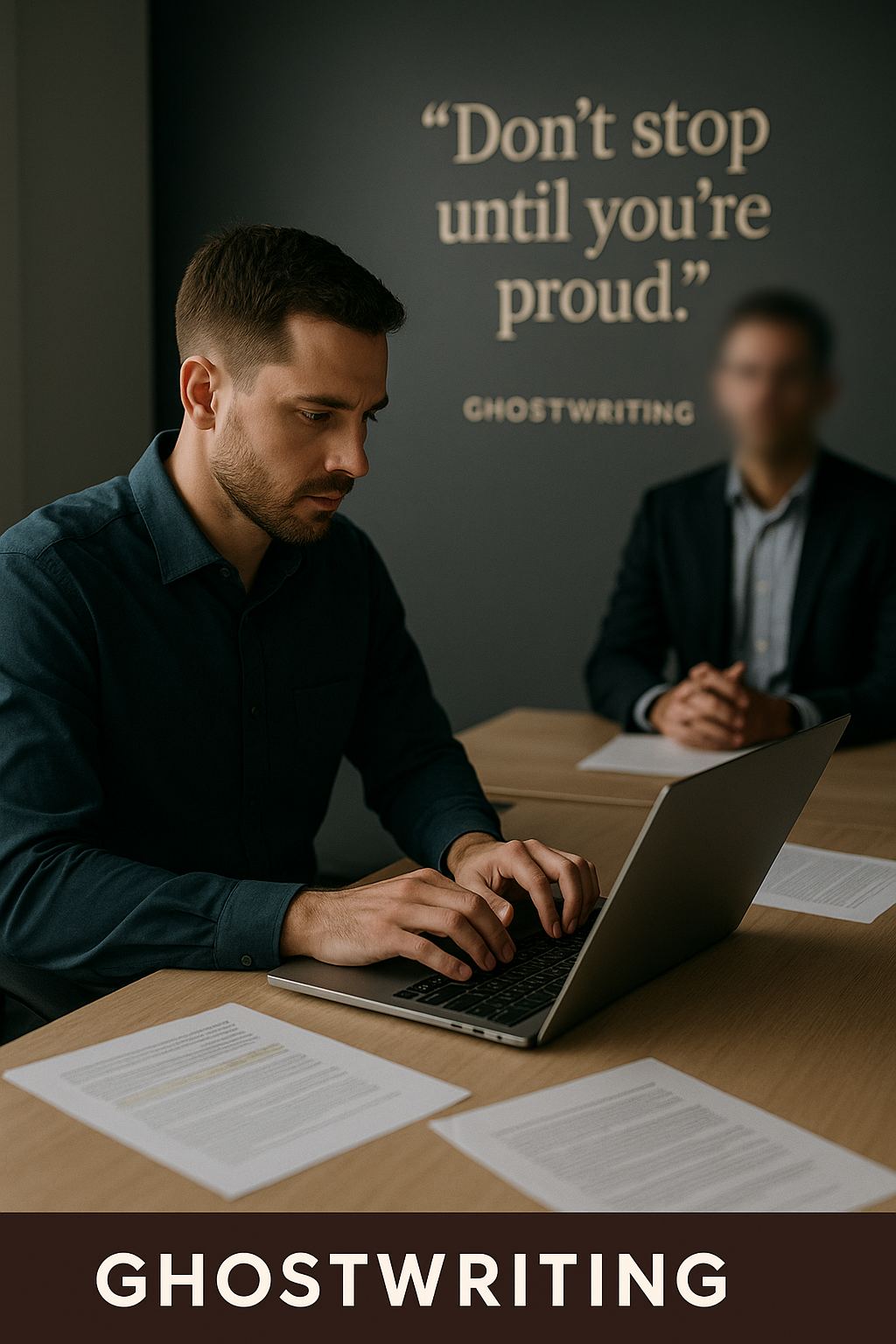
Ghostwriting is everywhere — but you’d never know it. Bestselling memoirs, viral blog posts, and even high-profile LinkedIn influencers often don’t write their material. The person behind the words? A professional ghostwriter.
So, what is ghostwriting really — and what does it take to do it well? If you need the ground rules first, this guide explains how ghostwriting works, including NDAs and who owns the finished work.
Whether you’re curious about writing books for clients or building a hidden freelance empire, here are 3 things you need to know.
✍️ If you’re serious about becoming a professional ghostwriter, it helps to see how this work is commissioned in practice — you can explore our ghostwriting services to see the kinds of projects clients hire ghostwriters for.
1. Ghostwriting Is More Common Than You Think
Most people think authors write every word themselves. The reality? Many don’t.
-
A large share of nonfiction books by celebrities, athletes and executives are ghostwritten.
-
Entire business blogs and email sequences are outsourced to skilled writers who remain behind the scenes.
-
Political speeches, medical guides, CEO letters — all likely touched by a ghostwriter.
Ghostwriting isn’t fraud — it’s collaboration. You’re helping someone share their voice, story, or message when they don’t have the time or skill to do it themselves.
📌 Read about ghostwriting in publishing — The New York Times
And if you want to see what that looks like on live projects? You can see the ghostwriting work we take on — where client confidentiality and clear ethical boundaries are part of how every project is handled.
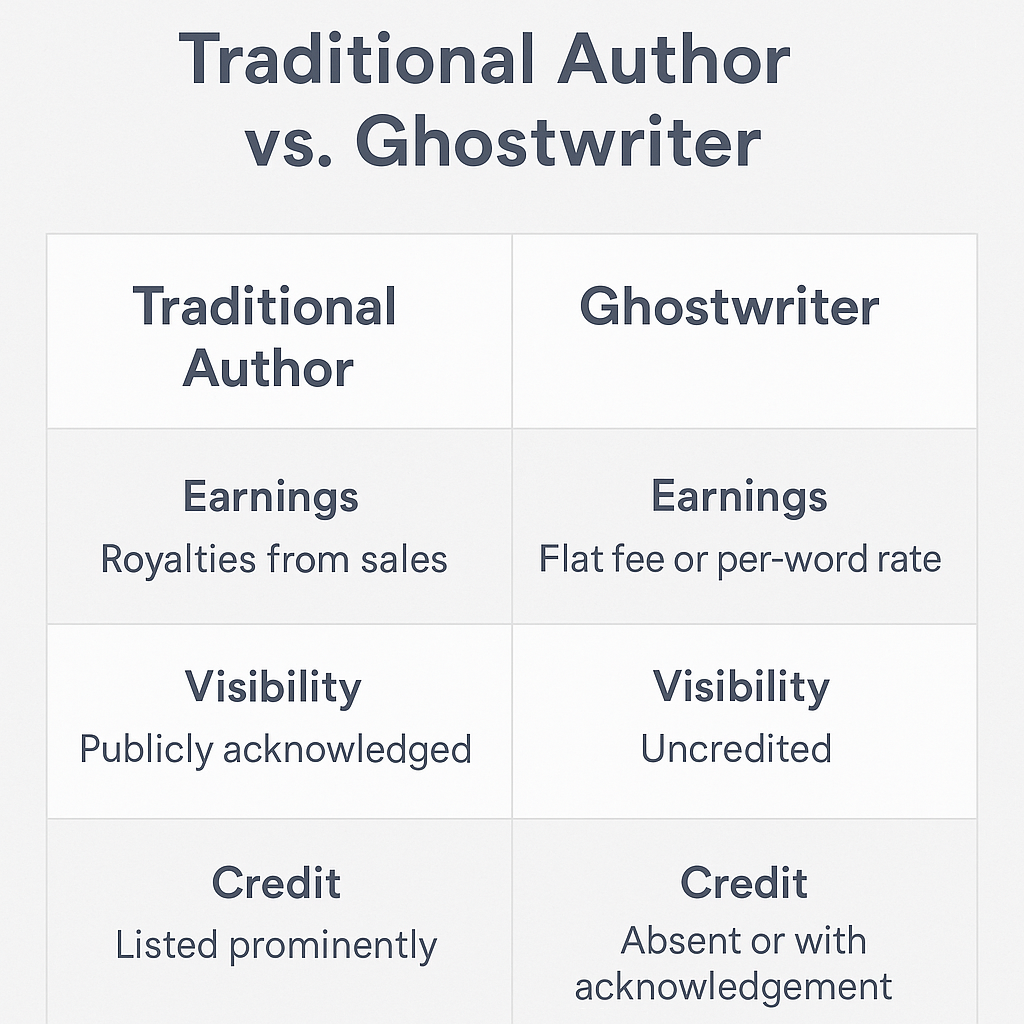
2. You Still Get Paid Like the Author — You Just Don’t Get the Credit
Ghostwriters often make more upfront than authors — even if their name never appears on the cover.
Here’s how it works:
-
Flat Fee: One-time project payment (e.g., $5,000–$50,000 depending on scope and experience).
-
Royalty Split: A percentage of future sales.
-
Hybrid Deals: Lower fee + royalties + milestone bonuses.
You won’t get the fame, but the money can be very real — especially if you ghostwrite books, business funnels, or scripts.
📌 U.S. Copyright Office – Work-for-Hire Explained
Whichever structure you agree to, the paperwork carries the weight: a written proposal, a signed NDA, and payment milestones settled before the first draft. Those details are what keep a ghostwriting arrangement from going sideways.
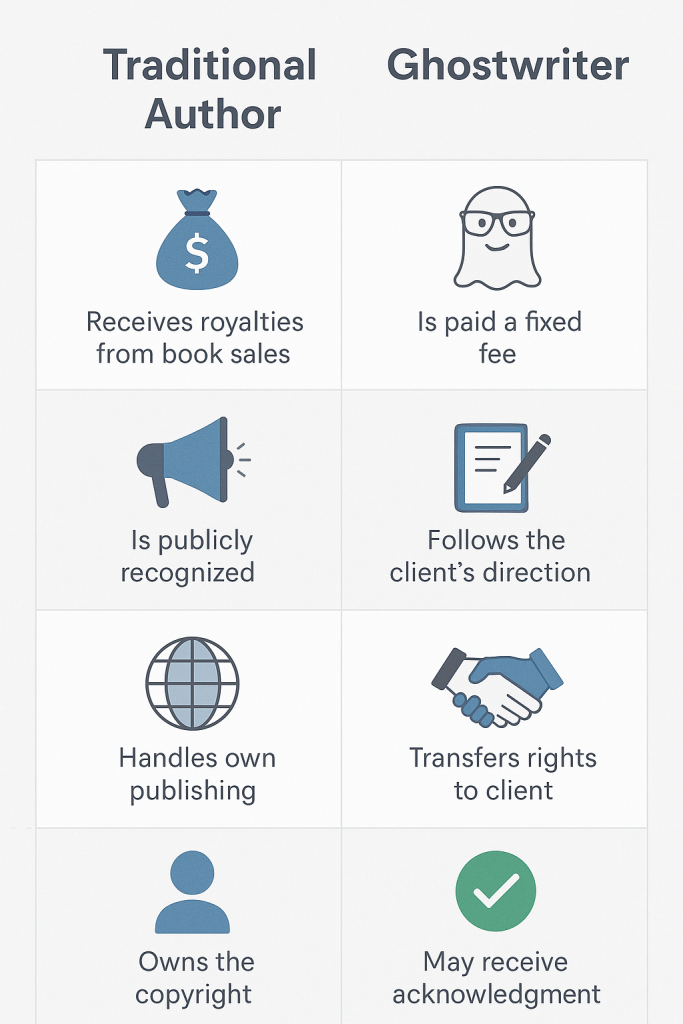
3. Great Ghostwriters Disappear — But Their Work Lasts
The goal of a ghostwriter is not to be recognized. It’s to make your client sound brilliant.
You have to:
-
Match their voice exactly — tone, word choice, rhythm
-
Interview them deeply — pull out the story they don’t know how to tell
-
Write with authenticity — the audience must believe it’s them
Ghostwriting is performance writing, and it is what we do.
The craft lives in the details: using AI without flattening the human voice, adapting to clients with very different personalities, and turning raw interviews into content that reads like the client wrote it.
📌 Narrative Voice – Writing Tips from Reedsy
🔎 FAQ: Real Questions People Ask About Ghostwriting
❓ What is ghostwriting and how does it work?
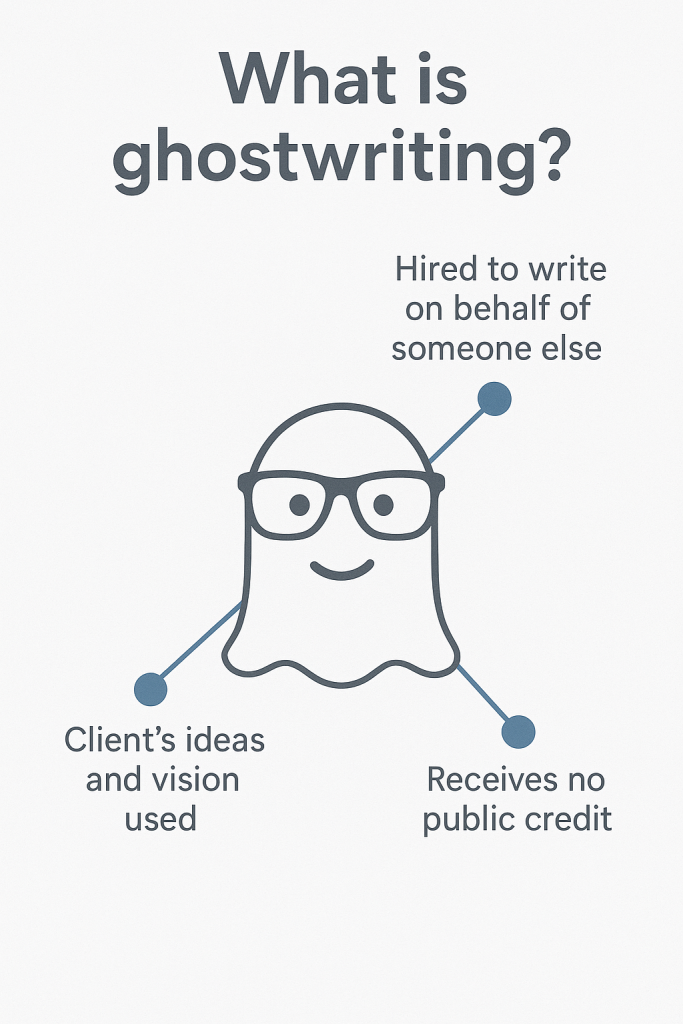
Ghostwriting is writing content that’s credited to someone else. A client hires a ghostwriter to write books, blogs, speeches, and other materials and publishes them under their name.
❓ Is ghostwriting legal?
Yes. It’s a legal business arrangement, typically protected by NDAs and service agreements.
❓ Can anyone become a ghostwriter?
If you’re a strong writer, willing to learn voice adaptation and client communication, you can become a ghostwriter.
❓ How much do ghostwriters get paid?
It varies. Blog posts might earn $200–$500; books can go from $5,000 to $100,000+ depending on length, experience, and royalties.
✨ Final Thoughts: Ready to Write for Others — and Get Paid Like a Pro?
Ghostwriting isn’t just a writing gig. It’s a business model, a skillset, and a career path. You don’t need followers or fame. Just results.
If you’re curious about how to ghostwrite, charge well, and deliver work that holds up behind the scenes, start here.
Need words you don’t have time to write? Ink In The Shadows ghostwrites books, blog posts, scripts and web copy that go out under your name. See what we write, or start a conversation about your project.


2 thoughts on “Ghostwriting as a Career: 3 Things Writers Should Know”
Comments are closed.